Custom Cheer Sticks With Your Logo: MOQ From 50 Pcs, Straight From the Factory
Custom cheer sticks — the inflatable sticks two sections of a crowd bang together to make noise — are one of the cheapest ways to put a brand in ten thousand photos. They are also one of the most commonly mis-ordered products in the party and events trade: wrong film thickness, wrong printing tier, and a MOQ misunderstanding that surfaces only after the artwork is already approved.
We manufacture inflatables in Chaozhou, China — foil balloons, party poppers and cheer sticks — and this guide is the version we give buyers before their first order. It covers what the product is actually called, which specs matter, how printing works, where the minimums start, and the five ordering mistakes we see every season.
First: the five names for one product
Search any trade platform and you will meet five names for the same stick. They are not different products:
| Name | Where you'll see it |
|---|---|
| Thunder sticks / thundersticks | US, Europe, sports merchandise |
| Bang bang sticks / bang sticks | UK, Australia, events industry |
| Bam bams | US promotional products trade |
| Cheering sticks / cheer sticks | Australia, Asia, general |
| Inflatable noise makers | Generic / spec sheets |
Buyers use all five. Suppliers know all five. If a supplier claims one is "a different product," ask for a photo of it inflated — it will be the same two tubes.
The specs that decide everything
| Spec | Available | Why it matters |
|---|---|---|
| Inflated size | 60 × 10 cm standard; custom sizes on request | Decides the "canvas" for your logo and the noise level |
| Film | PE, 0.06 mm (standard) or 0.08 mm (heavy-duty) — both in production | 0.06 covers single-event use at the best price; 0.08 is for sticks that must survive a season of reuse. Thickness is the difference between one match and a season |
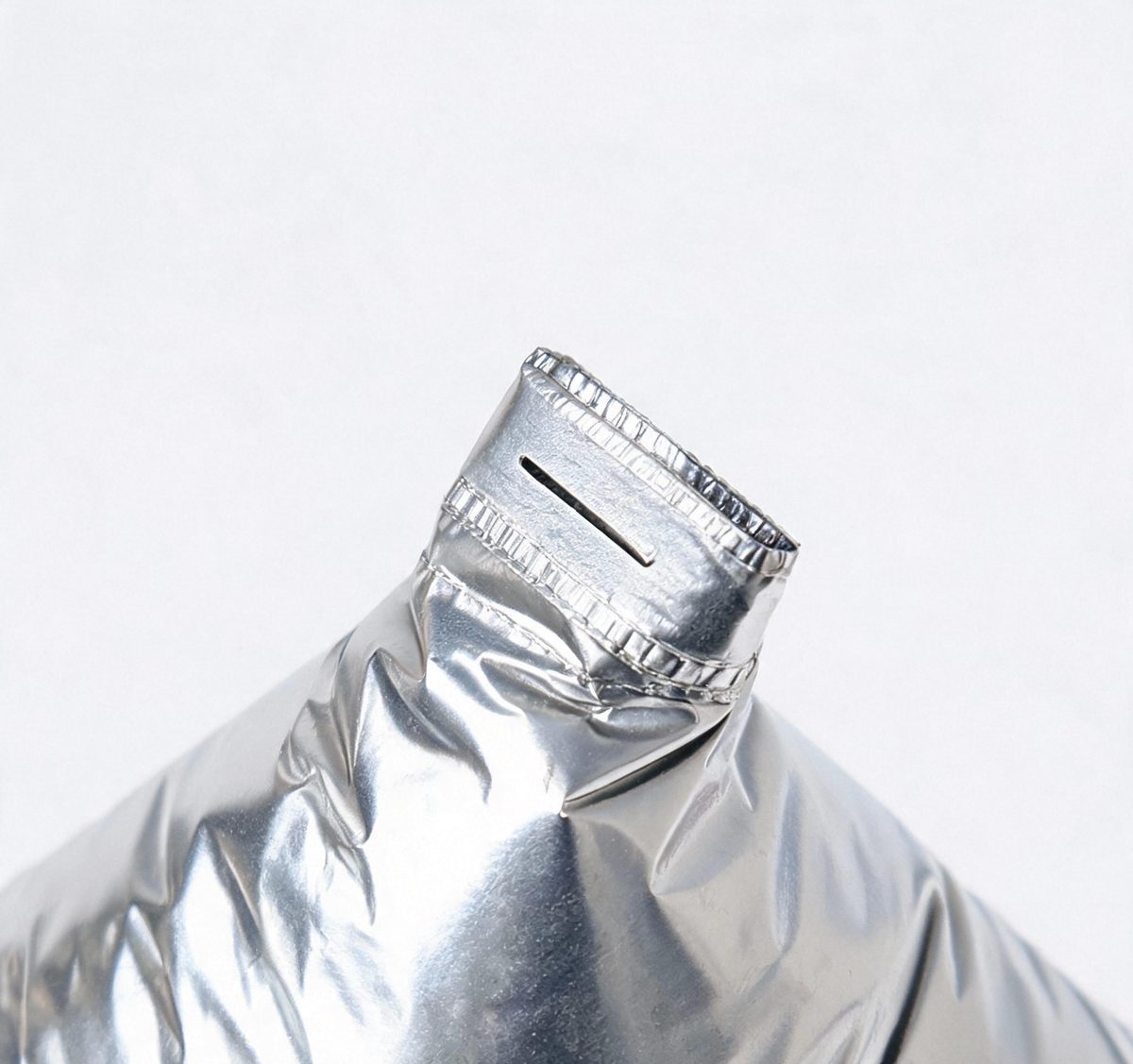
| Valve | Self-sealing — the same valve construction as our foil balloons | The most common failure point on cheap sticks — a slow valve leak kills the product before the event ends |
| Packing | Flat, in pairs, ~5,000 sticks per carton (varies by size and order) | Freight is quoted per carton — confirm the packing count before comparing prices |
| Certificates | EN71 / ASTM F963 on request | Needed for retail and school events in most markets |
Two specs worth insisting on: film matched to the use — 0.06 mm for single-event giveaways, 0.08 mm for sticks that must survive a season of reuse — and a self-sealing valve tested per batch. Sticks that arrive flat because the valve leaked are the single most common complaint in this category — and they are almost always a film or seam problem, not a "handling" problem.
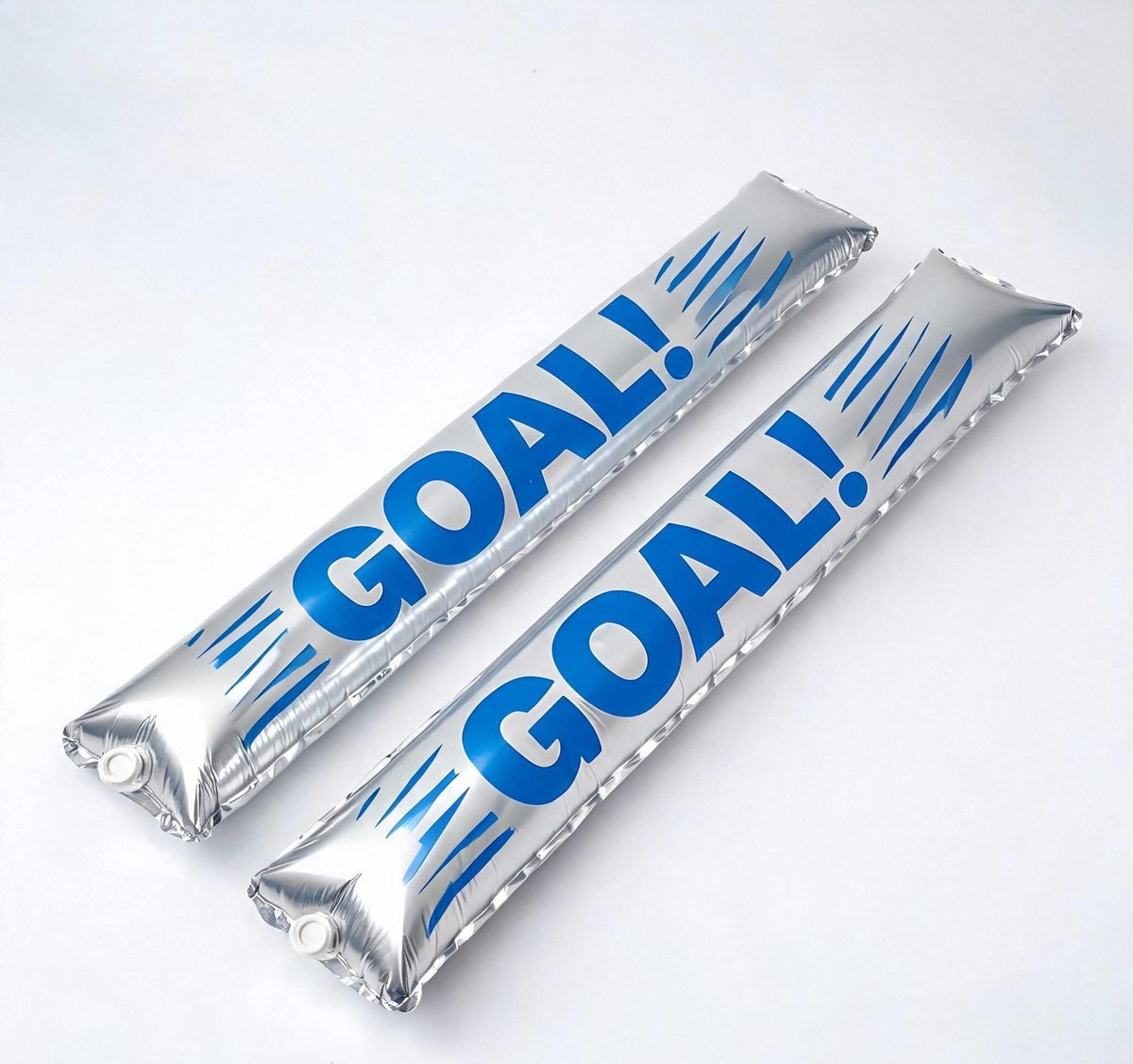
Printing: two tiers and a tooling option
| Tier | Colours | MOQ | Best for |
|---|---|---|---|
| Text / logo (silkscreen) | White or black print | from 50 pcs | Event dates, city names, logos, small test orders |
| Full-colour artwork (rotogravure) | Up to 15, Pantone-matched | from 10,000 pcs | Full-wrap brand artwork, gradients, photos |
| Fully custom shape | Any | from 5,000 pcs (new die, one-time tooling) | Shapes that do not exist in the catalogue |
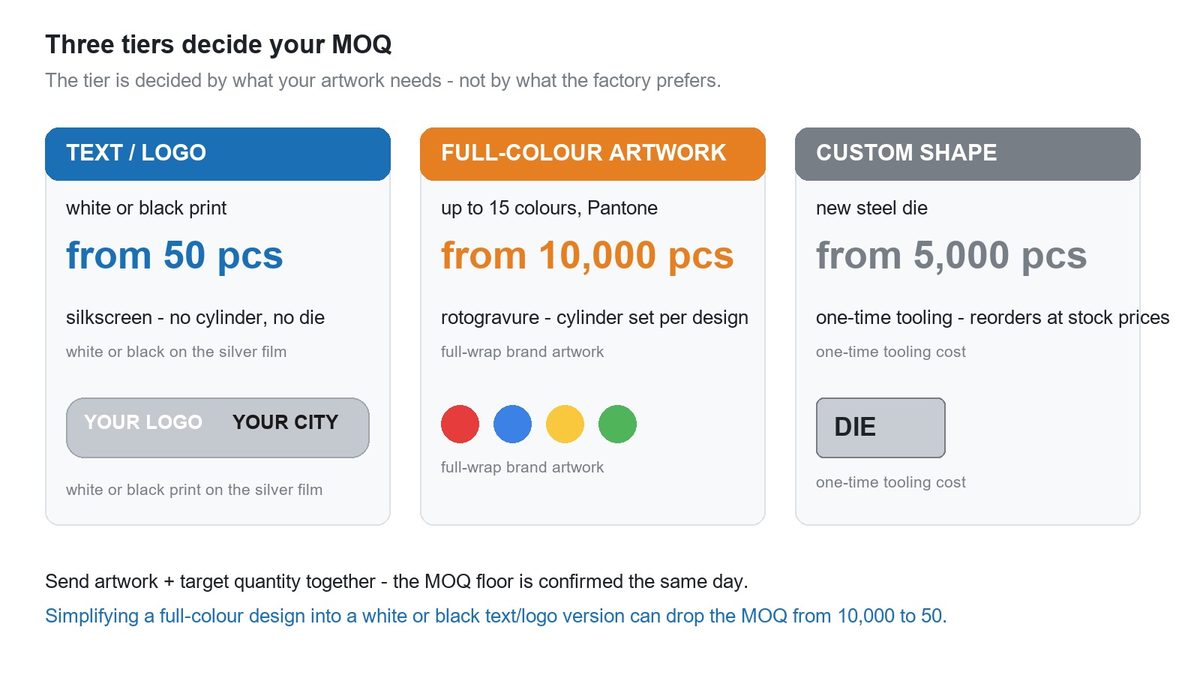
The tier is decided by what your artwork needs, not by what the factory prefers. White and black text or logos print by silkscreen on the silver film — no cylinder, no die, which is why the floor is 50 pieces. Gradients and photos print by rotogravure, and every design needs its own cylinder set — that setup is why full-colour starts at 10,000.
A practical note: sometimes the fix is simple. Converting a full-colour design into a white or black text-and-logo version can drop the MOQ from 10,000 to 50. If your event date is tight, ask which tier your design actually lands in before you redesign anything.
Air, not helium
Cheer sticks are inflated with plain air — by mouth, hand pump or compressor. No helium, no float time, no gas cost. That is exactly why they work as event giveaways: a venue can inflate 2,000 sticks with two electric pumps in an afternoon, and the sticks stay rigid for the whole event and can be deflated, folded and reused.
If a supplier's spec sheet mentions helium for cheer sticks, it was copied from a balloon listing. Different product, different physics.
Five ordering mistakes that cost money
1. Confusing pairs with pieces. Cheer sticks are sold and used in pairs — two tubes that bang together. "MOQ 500" usually means 500 pairs (1,000 sticks). Confirm the unit before comparing quotes, or your budget is off by 100%.
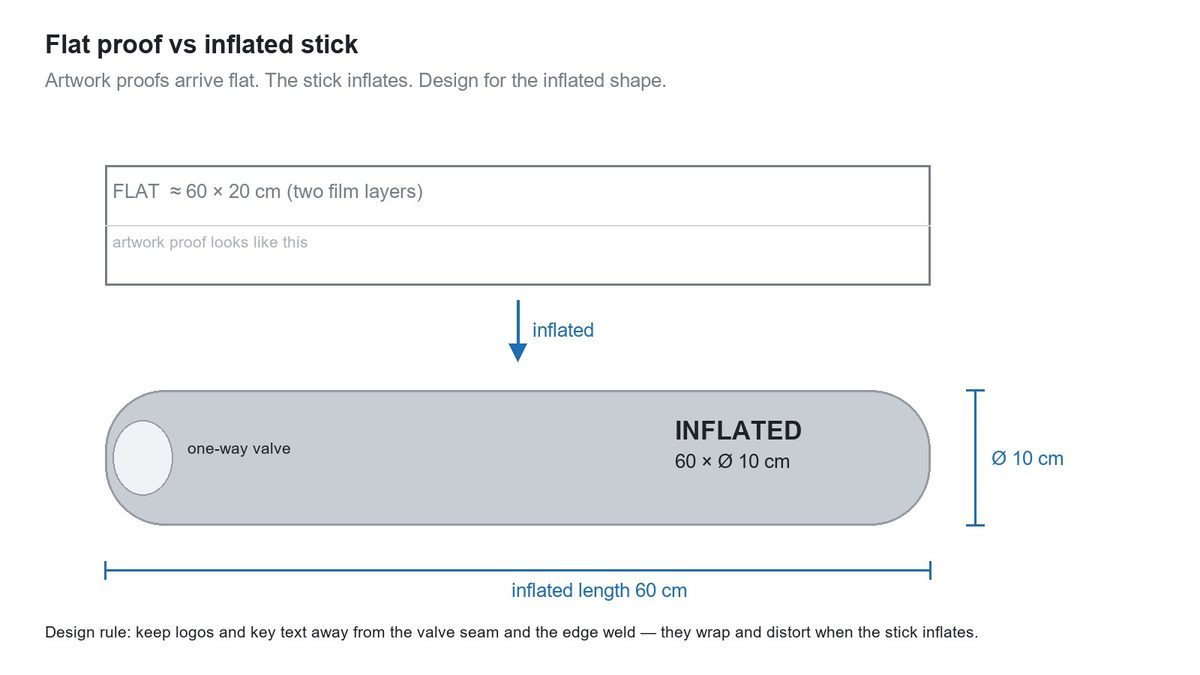
2. Approving flat-size mockups. Artwork proofs arrive flat; the stick inflates. Text placed across the valve seam or the edge weld will wrap, distort or disappear. Ask for the inflated-size artwork template before design starts.
3. Ordering vector artwork as a screenshot. Print-ready means AI, PDF or EPS at true size. A JPEG pulled from a website will print blurry at 60 cm wide — and the factory will print it blurry if you approve it.
4. Ignoring the event date math. Printing runs after artwork approval, plus freight. A stick order placed three weeks before a tournament ships late — the factory can flag this at quotation, but only if you tell them the event date.
5. Skipping the pre-production sample. A physical sample with your actual artwork costs a few days and reveals what no digital proof will: colour match on the film, seam quality, and how the design reads when inflated.
Where cheer sticks earn their keep
Sports matches and tournaments are the classic use, but the order book tells a broader story: concerts and festivals, election campaigns, brand activations and product launches, school spirit events, KTV and nightclub nights, and retail promotions where the stick doubles as the coupon carrier. The common thread: a crowd, a camera, and a logo that should be in the photo.
Quality checkpoints before you pay
- Print registration across both tubes — the artwork should line up at the seam
- Self-sealing valve — air-tested per batch (the same valve construction as our foil balloons)
- Film thickness on the spec sheet, verified on arrival with a micrometer if the order is large
- AQL inspection report before packing
- EN71 / ASTM F963 test reports if the sticks reach retail or school markets
Every shipment we pack goes through colour registration, seam strength, valve function and appearance checks — the same four checks we run on foil balloons, applied to a product whose whole job is to survive two hours of being banged together.
Frequently asked questions
What are thunder sticks made of?
PE film, 0.06 mm as standard and 0.08 mm for heavy-duty use. The thickness is a price-versus-durability decision — ask what is quoted before comparing prices.
How many cheer sticks do I need for an event?
A rough rule for stadiums: 1 pair per 4–6 seats in your target section. For a brand activation, count the photo moments, not the crowd size.
What is the MOQ for custom printed cheer sticks?
Text or logo in white or black: from 50 pcs. Full-colour artwork: from 10,000 pcs (rotogravure, cylinder per design). Fully custom shapes: from 5,000 pcs (new die, one-time tooling).
Can I get samples first?
Stock samples are free — you cover the courier. Printed samples with your artwork are produced after artwork approval.
How long does a printed order take?
After artwork approval, plus freight. Air freight is available for tight event dates — tell us the event date at quotation and we will confirm honestly whether it is realistic.
Wonabo manufactures foil balloons, party poppers and inflatable cheer sticks in Chaozhou, China — 10 production lines, 200,000 pcs a day, factory direct since 2017. Send your artwork and target quantity; we reply with unit price, MOQ and lead time within 24 hours.
*Related reading: Foil Balloon MOQ Explained · Custom Printed Foil Balloons: Screen vs Digital vs Flexo · Retail-Ready Foil Balloon Packaging*